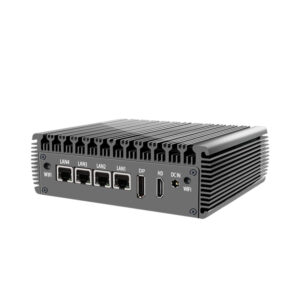
A comprehensive fanless industrial mini PC provides reliable serial ports for legacy devices. We offer engineers purchasing a fanless industrial mini PC a framework for evaluating hardware options, matching them to application requirements, and avoiding common integration pitfalls. We’ll explain how to compare RS-232 and RS-485, select GPIO voltage levels and isolation strategies, design Ethernet redundancy and PoE, and plan cabling, grounding, and software stacks to ensure your fanless system remains robust in harsh environments.
Serial Interfaces for Fanless Industrial Mini PC
Serial communication remains ubiquitous on the factory floor, and Zkmagic’s fanless industrial mini PCs must support multiple serial modes (RS-232, RS-485, and sometimes RS-422) to connect to PLCs, barcode scanners, CNC controllers, and field instruments. RS-232 is the simplest and most common legacy interface: single-ended, point-to-point, and compatible with low-speed control signals. It uses ±3 to ±15 V signaling, making it ideal for short cable runs of less than 15 meters. However, RS-232 is susceptible to common-mode noise and ground offset. For a robust deployment, choose a mini PC equipped with transient voltage suppression (TVS) diodes, robust ESD protection, and a chassis grounding scheme.
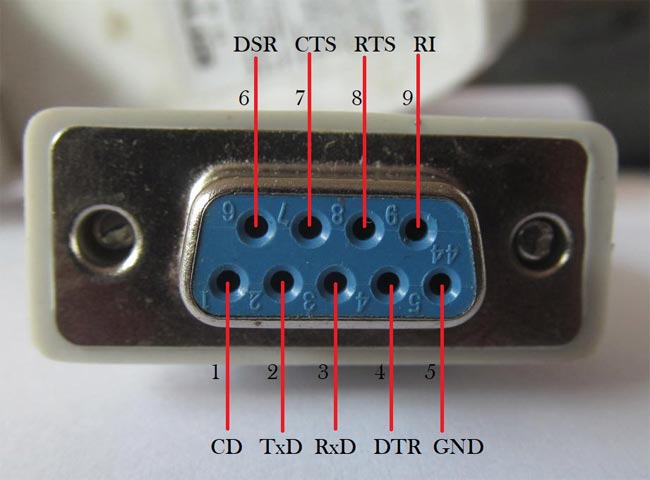
RS-485 (and RS-422) provide differential signaling for multi-point networks and long-distance cable transmission, making them the preferred choice for Modbus RTU and many industrial sensor buses. Fanless industrial mini PCs for process control should provide an isolated RS-485 transceiver and optional termination. Installing a 2.5 kV or higher galvanic isolator between the serial transceiver and system ground prevents ground loops and protects the PC from voltage spikes on long field cables.
At the same time, industrial gateways often require multiple serial ports, sometimes eight or more on compact fanless systems. Look for mini PCs that combine an onboard UART interface with modular expansion to enable expansion without sacrificing space. Additionally, it’s best to choose a motherboard with a UART interface that supports hardware flow control (RTS/CTS) to support higher baud rates and reliable data streaming.
Digital I/O for Fanless Industrial Mini PC
General-purpose I/O (GPIO) transforms a fanless industrial mini PC into a direct controller: it allows you to read discrete sensors, drive relays, and implement interlocks without the need for an intermediate PLC. However, GPIO is the most easily misspecified function.
Digital GPIO typically comes in the form of TTL/CMOS levels on internal headers or hardened industrial 24V I/O on external terminals. For field interoperability, 24V I/O is preferred. Industrial sensors and safety devices often use 24V logic, and integrated 24V fault-tolerant inputs can eliminate the need for additional interface circuitry. Many fanless mini PCs use optically isolated digital I/O modules to provide voltage conversion and noise suppression. Optical isolation isolates the logic domain from the field, eliminating the risk of ground loops and limiting fault propagation. Furthermore, analog I/O is essential for process measurements. Examples include thermocouples, RTDs, current loops, and voltage sensors. If your application directly measures temperature, pressure, or flow, specify the required resolution and sampling rate.
Industrial-Grade LAN and Networking
Networking is the backbone of Industry 4.0. Modern fanless industrial mini PCs must include industrial-grade LAN capabilities, including multiple Gigabit Ethernet ports, Power over Ethernet support, VLANs, QoS, and redundancy. Evaluate these features based on your operational needs and network architecture.
Starting with port count and speed, dual or quad Gigabit Ethernet ports support network segmentation, with one port for deterministic factory floor traffic and another for corporate network or VPN management. Consider port isolation to separate sensitive OT traffic and support dual-homing. For distributed I/O nodes, PoE simplifies power distribution and cabling and can power cameras or small sensors, but verify the cooling efficiency of fanless chassis.
Industrial networks require features such as VLAN tagging, 802.1Q support, and priority queuing. Use VLANs to isolate SCADA traffic from management access. QoS prioritizes protocol traffic, reducing latency tolerance and protecting telemetry flows during congestion. Redundancy and determinism are crucial. Implement link aggregation to increase throughput and failover capabilities, or implement ring protocols for increased resiliency. If your application requires real-time bus performance, explore industrial Ethernet protocols such as EtherCAT, PROFINET, or Sercos.

Mechanical and Thermal Considerations Affecting I/O Reliability
I/O reliability in fanless industrial mini PCs is inextricably linked to mechanical design and thermal engineering. Because fanless systems utilize passive cooling, connector placement, PCB traces, and enclosure material all impact long-term signal integrity and connector life. Thermal mapping should be performed before making I/O layout decisions. High-power components generate heat, which can migrate to nearby connectors. Position sensitive analog front ends and isolated transceivers away from these heat sources and route thermal vias underneath heat-generating chips to the chassis. Using metal enclosures with integrated heat sinks or heat pipes to increase thermal mass can keep junction temperatures within specified limits and extend the life of I/O components.
Vibration and shock are also real concerns in industrial environments. Therefore, choose rugged connectors that won’t loosen easily, and avoid low-retention-force connectors for field I/O. Ingress protection can also impact I/O reliability. For dusty or washdown environments, specify enclosures with an IP rating (IP65/67) and ensure the connectors meet that rating when mated.
Integration and Testing for a Successful Deployment
Proper integration and testing ensure successful operation. During testing and commissioning, we perform Factory Acceptance Testing (FAT), including serial throughput testing at the required baud rate, RS-485 multi-point stress testing, GPIO latency and jitter measurements, and sustained Ethernet throughput testing under load using VLANs and QoS. For fanless devices, we perform heat soak testing under full I/O and CPU load to verify that sustained operation does not trigger throttling or degrade signal integrity. Upon request, we provide spare parts kits for commonly failed connectors, one or two spare COM modules, and a firmware maintenance SLA. Verify that your vendor has a clear EOL policy and migration path, and that replacement modules are pin-compatible whenever possible.
Choose the right I/O strategy for a resilient, long-life deployment
A robust I/O strategy can make a fanless industrial mini PC a reliable industrial asset. In this guide, we cover serial interfaces and the importance of isolation and port density, GPIO best practices, LAN options from PoE to redundancy and industrial protocols, and mechanical and thermal design considerations that impact long-term reliability. When evaluating fanless mini PCs, consider systems with flexible, isolated I/O, well-defined electrical specifications, industrial-grade LAN functionality, and conservative thermal designs.