
Rugged storage can prevent data loss on an industrial pc for factory automation. This is a critical issue influencing procurement, engineering, and operational decisions for every factory that relies on reliable data. In automated factories, industrial PCs collect machine telemetry data, record batch histories, host local HMIs, and sometimes even run vision systems. When a storage device fails, not only do you lose files, but you also lose traceability, production continuity, and the audit trails necessary for quality control. Therefore, choosing rugged storage is a system-level decision.
Matching Workloads and Media Types to an industrial pc for factory automation
First, determine the actual purpose of the storage in the industrial pc for factory automation. Is it capturing continuous, high-resolution video from vision systems? Is it storing millisecond-resolution PLC logs and short telemetry bursts? Or is it primarily storing local operating system images and occasional logging? These workload patterns will determine whether you prioritize sequential throughput, random I/O performance, or write endurance.
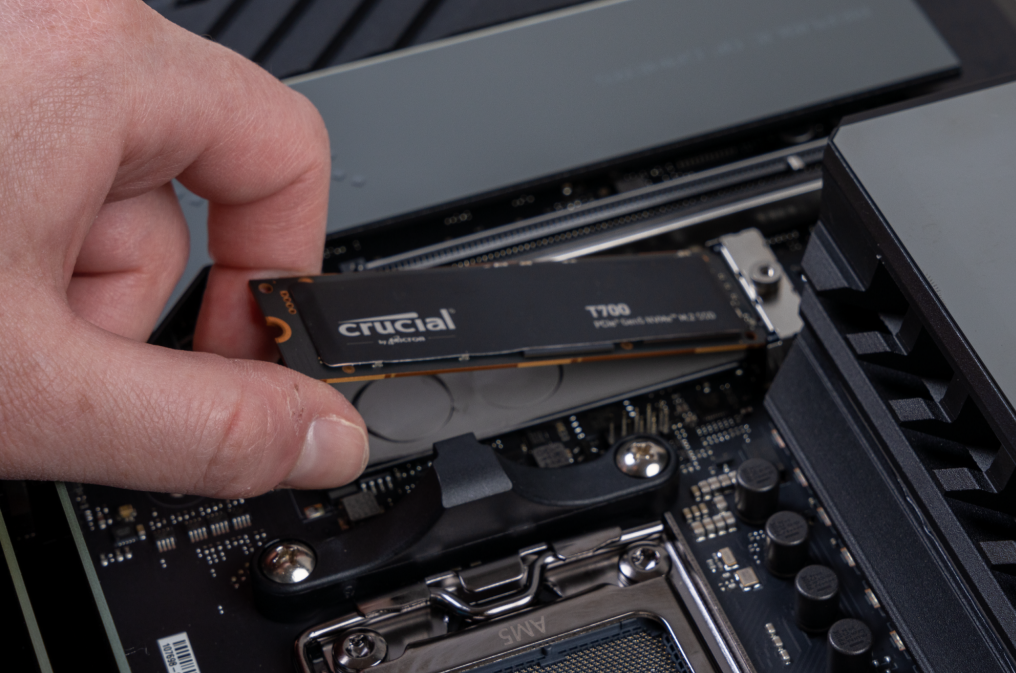
Solid-state storage (SSD, NVMe, M.2) is the default choice for rugged deployments because it has no moving parts and is more shock-resistant than HDDs. For streaming video or large datasets, NVMe PCIe SSDs can provide the required sequential write throughput. Conversely, for frequent, small writes, choose drives with strong random IOPS performance and high write endurance. If board space is limited, an industrial PC for factory automation platforms may require M.2 or CFast modules.
Also, evaluate the NAND type; SLC and pSLC modes offer the best endurance under write-intensive workloads. Match the expected daily write volume with the vendor’s TBW or DWPD figures to ensure the drive will last until the scheduled service interval.
Incorporate endurance, wear management, and overprovisioning
Endurance is the most measurable metric for flash memory lifespan, and these metrics must be modeled based on the amount of data in the device. For example, if an industrial PC writes 500 GB per day, a 1 TB drive rated at 0.3 DWPD may fail sooner than one rated at 3. Be sure to include a margin in your calculations for future growth.
Beyond raw data, consider how the drive manages wear. High-quality industrial hard drives implement wear-leveling algorithms to evenly distribute writes and reserve dedicated over-provisioning space to manage bad blocks. Drives that support configurable over-provisioning offer a trade-off between usable capacity and endurance. Additionally, we evaluate controller firmware: Industrial-grade firmware tends to prioritize consistent behavior and predictable latency over peak benchmark scores.
Power-loss protection and data integrity are required for factory automation industrial PCs.
Unexpected power loss is one of the leading causes of data corruption in factory settings. To mitigate this, choose storage devices with hardware-level power-loss protection (PLP). PLP uses onboard capacitors or supercapacitors to provide sufficient energy to flush the drive’s volatile cache to the non-volatile NAND and complete internal metadata updates. Without PLP, dynamic writes can leave the file system or database in an inconsistent state, resulting in partial writes or index corruption.
In addition to PLP, look for drives that provide end-to-end data path protection, CRC checksums, and atomic write guarantees. These features ensure that data transferred from the host reaches the NAND intact and that the system fully completes metadata updates. On the software side, enable synchronous writes for critical files and ensure that applications call fsync (or equivalent functions) to flush caches. Combining hardware PLP, safe write policies, and system-level power buffering significantly reduces the likelihood of irreversible data loss due to power anomalies.
Design for Temperature, Shock, Vibration, and Enclosure Constraints
Factory environments can introduce mechanical stresses, including heat from adjacent equipment, cold storage, vibration from conveyor belts, and occasional impacts. Ensure that the storage device’s temperature rating meets the operating temperature range of industrial PCs for factory automation. Industrial hard drives typically support a temperature range of -40°C to +85°C, while consumer-grade drives do not. High temperatures accelerate NAND wear, while low temperatures can cause temporary performance degradation or risk condensation.
If the device will be installed in mobile equipment or near heavy machinery, we use hard drives that have been tested to IEC or MIL-STD levels. For industrial mini PC installations with tight space and thermal constraints, we utilize hard drives equipped with robust thermal throttling and employ thermal pads or heat sinks to dissipate heat away from the module. We also use shock-absorbing brackets, tighten the M.2 module’s retaining screws, and ensure the connectors are locked whenever possible. By designing for realistic mechanical and thermal environments, we avoid environmental failures that are difficult to diagnose and costly to repair.
Implementing Redundancy, Backups, and Resilient File Systems
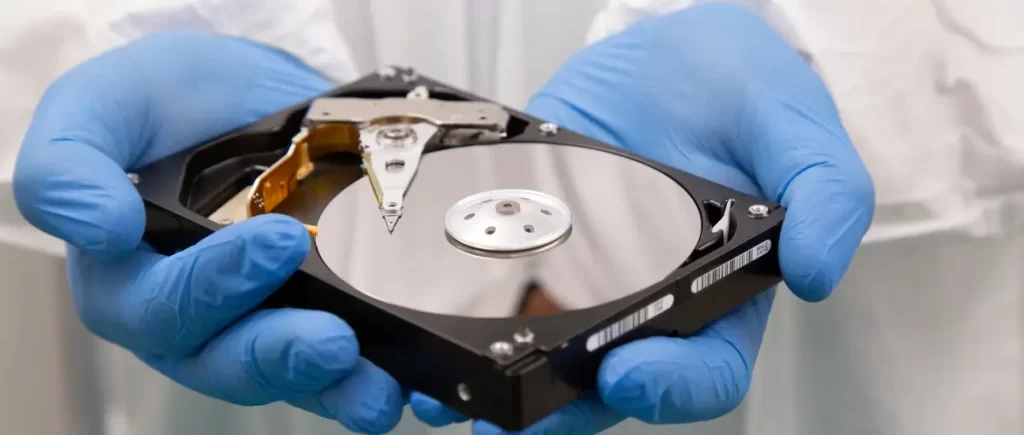
Redundancy reduces the impact of media failures. For controllers managing critical processes, we implement RAID 1 or higher to provide instant recovery from a single drive failure. In edge deployments, the system replicates essential data to a central server or cloud storage during low-load periods to ensure an off-site copy. Furthermore, we prioritize file systems and database engines that prioritize integrity: journaling file systems or copy-on-write systems reduce the risk of corruption and provide faster recovery after a crash.
Use snapshots to capture consistent recovery points, and automate backups with versioning to restore data to a known good state. Finally, integrated monitoring capabilities track SMART attributes and alert you to media health anomalies, allowing you to replace drives proactively before catastrophic failure occurs.
Preventing Data Loss on Industrial PCs
Selecting rugged storage devices to prevent data loss on factory automation industrial PCs requires a rigorous, multi-layered approach. First, we match the media and interface to the actual workload, configuring the appropriate NAND type and form factor for a full-sized industrial PC or compact industrial mini PC. We ensure endurance and wear management features exceed the expected number of write cycles. We require hardware power-loss protection and end-to-end data integrity, and design thermal and mechanical solutions to keep the drive within its rated range.