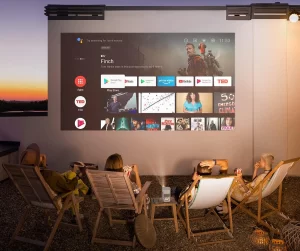
Mini Projectors are often associated with compact size, easy setup, and flexible use. Power consumption, however, is rarely the first topic that comes to mind. From an engineering and system-design perspective, energy efficiency directly influences performance stability, installation flexibility, operating cost, and long-term reliability. As a manufacturer dedicated to the research, development, and production of Mini Projector solutions, we view energy efficiency not as a secondary feature, but as a core design principle.
Mini Projector Power Consumption Basics
Understanding power consumption is the foundation of evaluating any Mini Projector installation system. In simple terms, power consumption is the amount of electrical energy a projector consumes during operation, typically measured in watts. Compared with traditional full-size projectors, a Mini Projector is designed to operate at significantly lower wattage, making it suitable for home entertainment, business presentations, and mobile scenarios.
A typical Mini Projector may consume anywhere from 30W to 150W, depending on brightness output, projection technology, and cooling design. A Mobile Projector, for example, often prioritises low power draw to support battery operation or USB-C power input. This reduced energy requirement allows greater installation flexibility, especially in environments with limited or unstable power availability.
From an engineering standpoint, lower power consumption also means less heat generation. This directly contributes to quieter operation, smaller cooling systems, and improved component longevity, all of which enhance the overall user experience.

Mini Projector Energy Efficiency Explained
Energy efficiency goes beyond how much power a Mini Projector uses; it focuses on how effectively that power is converted into usable brightness and image quality. An energy-efficient Mini Projector delivers strong visual performance without excessive power draw, ensuring consistent output over extended use.
Modern Mini Projector designs rely heavily on LED or laser light sources, which are far more efficient than traditional lamps. These technologies allow a Mobile Projector to achieve stable brightness levels while consuming less energy and maintaining colour accuracy. In addition, advanced power management systems dynamically adjust energy usage based on content, ambient light, and operating mode.
From a system integration perspective, energy efficiency also affects how the projector interacts with external components. Efficient power usage reduces stress on power adapters, batteries, and internal circuits, resulting in a more reliable installation that performs consistently over time.
Engineering Approaches to Power Optimisation
Power efficiency begins at the design stage, where engineers carefully select processors, light engines, and cooling modules to balance performance with energy use. Rather than relying on excessive brightness output, modern projection systems emphasise intelligent optimisation to achieve consistent visual results while keeping power consumption under control.
At the system level, efficient power design also extends to connectivity and expansion. A well-optimised architecture supports rich I/O interfaces, including dual Gigabit Ethernet ports, two COM ports, six USB ports, and dual VGA and HDMI display outputs. Wireless connectivity options such as WiFi and optional 4G modules are integrated with power management in mind, ensuring stable data transmission without unnecessary energy overhead.
Image processing chips are typically optimised for low-voltage operation while maintaining fast response times. Cooling systems are engineered to dissipate heat effectively using minimal fan power, while enclosure materials and airflow paths are designed to support passive cooling whenever possible. This integrated design approach ensures that energy savings do not compromise image quality, system stability, or connectivity reliability. As a result, the device performs efficiently across a wide range of scenarios, from brief presentations to extended movie sessions.

Mini Projector Installation and Energy Impact
Installation plays a crucial role in determining a Mini Projector’s real-world energy efficiency. Proper placement, ventilation, and power configuration can significantly influence performance and power consumption. For example, installing a projector in a well-ventilated space allows cooling systems to work more efficiently, reducing overall energy use.
A Mobile Projector used in portable setups often benefits from flexible power options, including power banks or low-wattage adapters. These configurations highlight the importance of efficient energy design, as the projector must deliver stable performance even with limited power input.
From an installer’s perspective, energy-efficient Mini Projector systems simplify planning. They reduce the need for heavy-duty power infrastructure, lower operating costs, and expand installation possibilities in residential, commercial, and outdoor environments.
Mini Projector Usage Scenarios and Efficiency
Different usage scenarios place different demands on a Mini Projector, making energy efficiency even more critical. In home environments, users may run the projector for several hours at a time, where efficient power consumption translates directly into lower electricity costs and quieter operation.
In business and education settings, a Mobile Projector may be used intermittently throughout the day. Fast startup, low standby power, and automatic sleep modes help conserve energy without disrupting workflow. These features reflect thoughtful engineering focused on real-world usage patterns.
Outdoor or temporary installations further emphasise the value of energy efficiency. A Mini Projector that consumes less power can run longer on portable energy sources, offering greater freedom and reliability in non-traditional settings.

Long-Term Reliability Through Energy Efficiency
Energy efficiency directly impacts the lifespan of a Mini Projector. Lower power consumption reduces thermal stress on internal components, a primary cause of performance degradation over time. By operating at optimised power levels, the projector maintains stable brightness and colour consistency throughout its service life.
For a Mobile Projector, this advantage is significant. Frequent movement and varying power conditions can place additional strain on hardware. Efficient energy management helps mitigate these risks, ensuring consistent performance regardless of the environment.
From a cost perspective, energy-efficient Mini Projector systems also reduce long-term expenses. Lower electricity usage, fewer maintenance requirements, and extended component lifespan combine to deliver greater overall value.
Mini Projector Future Efficiency Trends
Looking ahead, energy efficiency will continue to shape the evolution of Mini Projector technology. Advances in semiconductor design, light-source efficiency, and intelligent power control are enabling even lower power consumption without compromising visual quality.
Future Mobile Projector systems are expected to integrate more innovative energy-monitoring features, allowing users to track and optimise power usage in real time. These innovations align with broader sustainability goals while meeting growing demand for portable, flexible projection solutions.
As manufacturers, we see energy efficiency not as a single feature, but as an ongoing commitment. Each generation of Mini Projector reflects deeper integration of efficient design principles, ensuring that users benefit from both performance and responsible energy use.