When it comes to storage options for the industrial mini PC, NVMe, SATA, and eMMC each offer different performance ranges, endurance characteristics, physical footprints, and reliability trade-offs, all of which directly impact field uptime, data integrity, and total cost of ownership. For engineers supporting industrial automation, gateways, kiosks, or rugged industrial tablet deployments, the wrong storage choice can lead to premature failures, extended repair cycles, or unacceptable performance under real-world workloads.
NVMe outperforms other industrial mini PC storage options for demanding industrial workloads.
When raw I/O performance and low latency are critical, NVMe is the clear winner for industrial mini PCs. NVMe SSDs use PCIe lanes and the NVMe protocol to fully exploit the parallelism of NAND flash memory, delivering higher sequential throughput and lower latency than SATA or eMMC. A typical PCIe Gen3 x4 NVMe drive can sustain sequential read speeds of 1.5-3.5 GB/s and hundreds of thousands of random IOPS, while a SATA3 drive can only reach a maximum of approximately 550 MB/s sequential read speed and tens of thousands of IOPS. Originally designed for embedded eMMC storage in mobile devices, eMMC offers significantly lower throughput and random access performance than either SATA or eMMC.
This is crucial in workloads such as machine vision, edge inference, and high-frequency data buffering, where workloads demand both bandwidth and low tail latency. NVMe can reduce lag and improve responsiveness. However, NVMe drives typically consume more power under high load and typically have a higher cost per GB than SATA or eMMC.
Comparison of Endurance and Reliability
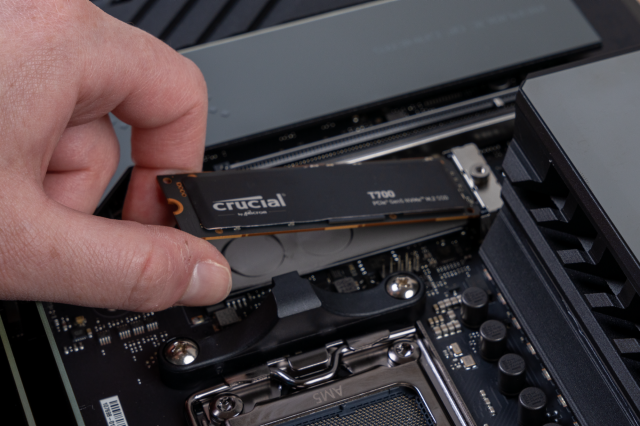
For industrial-grade mini PC deployments, endurance and a predictable lifespan are crucial. NAND flash memory is a wear-limited medium, and vendors express endurance in terabytes written (TBW) or times written (DWPD). Industrial workloads involving continuous logging, local caching, or frequent dataset updates require higher endurance ratings than applications that perform occasional reads.
Industrial-grade NVMe and SATA SSDs are manufactured with higher-endurance NAND and include enterprise-grade controllers with robust wear leveling and error correction capabilities. These drives boast higher TBW, longer MTBF values, and longer warranties. Conversely, industrial-grade mini PCs using eMMC are available in industrial temperature-rated and higher-endurance versions.
Temperature, Shock, and Vibration Considerations
Industrial environments place different storage requirements than office environments. Extreme temperatures, thermal cycling, shock, and vibration are daily challenges in motors, conveyors, vehicles, and outdoor cabinets. Therefore, environmental resistance is a primary consideration when selecting storage for industrial mini PCs.
Industrial-grade SSDs (both NVMe and SATA) are available in wide-temperature versions (typically -40°C to +85°C). They utilize temperature-rated components and thermally reliable flash memory. Manufacturers also offer eMMC in industrial-grade versions with extended temperature specifications and typically solder it directly to the motherboard, eliminating mechanical interfaces that could loosen under vibration. This soldering feature is advantageous in mobile or high-vibration industrial tablets and vehicle deployments, as there are no removable connectors to fail. Because consumer-grade M.2 drive connectors are fragile, they typically have lower shock and vibration ratings. Industrial-grade M.2 NVMe modules and 2.5-inch SATA drives undergo higher g-level testing and come with reinforced components or ruggedized enclosures.
Form Factor, Serviceability, and Integration in Constrained Industrial Systems
Size and serviceability significantly influence the storage solution you choose for your industrial mini PC. Because eMMC is soldered to the circuit board, it’s well-suited for sealed or compact designs (such as thin industrial tablets and embedded gateways) that don’t require replacement. The downside is that field repairs require board-level rework.
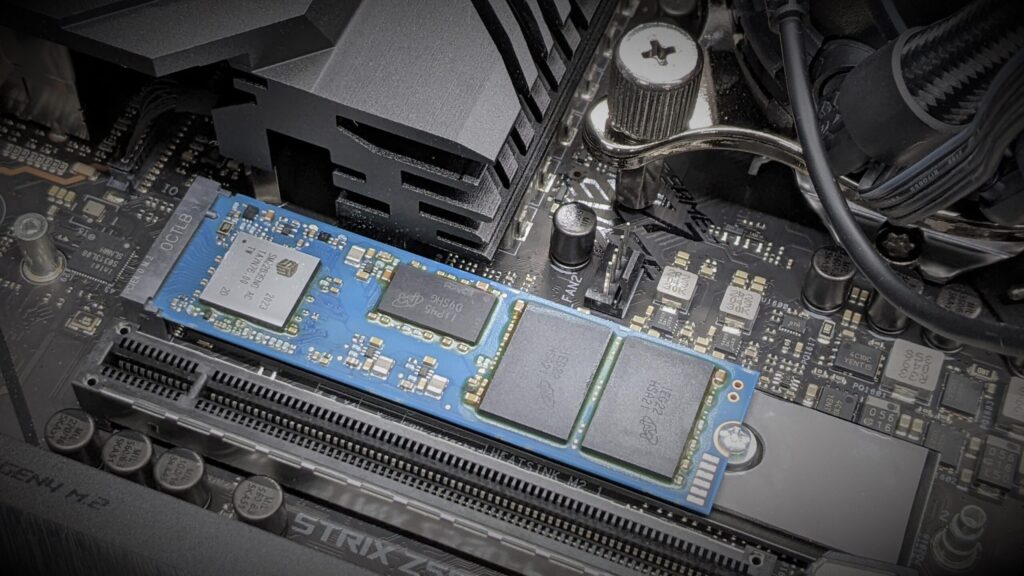
SATA options include 2.5-inch hard drives or mSATA cards, which are easily replaceable; many industrial mini PCs offer tool-less drive trays for quick and easy replacement. NVMe is available in the M.2 form factor (2230/2242/2260/2280), U.2, or PCIe add-in cards. M.2 NVMe drives mount directly to the motherboard and are typically field-replaceable, but tight seals or rugged enclosures may restrict access. Some industrial systems use removable M.2 enclosures behind easy-access panels, combining NVMe speed with serviceability.
Data Integrity, Power-Loss Protection, and Security Features
In industrial deployments, operators must guarantee data integrity in the event of unexpected power outages or system failures. Consumer-grade flash controllers can lose in-flight writes in the event of a sudden power loss, resulting in file system corruption—an unacceptable risk in many industrial applications. Industrial-grade NVMe and SATA SSDs typically include power-loss protection (PLP) capacitors or firmware to safely flush the volatile cache to the NAND, protecting metadata and in-flight writes.
Industrial mini PC use cases with critical logging or transactional write operations require PLP or pseudo-PLP functionality, with support for write atomicity and correct logging. Furthermore, devices equipped with enterprise-grade controllers offer more robust error correction and predictable failure modes. Security is also a component of reliability. Hard drives with hardware encryption (TGC, Opal) and secure erase functionality help meet regulatory and data protection requirements.
Matching Storage Requirements to Industrial Mini PC Use Cases
Choosing between NVMe, SATA, and eMMC for industrial mini PCs isn’t about selecting the “best” technology, but rather matching the technology to the role. NVMe is essential when high throughput and low latency directly impact application performance, such as edge AI, machine vision, and high-speed caching. SATA is an excellent and practical choice for the replaceable, mid-performance tier. eMMC is well-suited for sealed, cost-sensitive embedded nodes and industrial tablets, where its compactness and soldered reliability reduce the risk of mechanical failure.