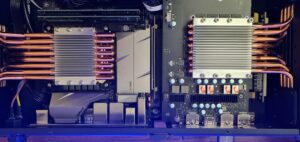
Edge Computing Fanless PC: This is especially true across industries such as healthcare, manufacturing, logistics, and smart cities. Edge Computing and fewer PCs are essential for processing data locally, eliminating the delay caused by sending data to the cloud. These fanless PCs enable real-time data collection and analysis, making them indispensable in modern data-driven environments.
The Role of Edge Computing Fanless PC in Real-Time Data Processing
Edge computing is the practice of processing data closer to where it is generated, rather than relying on distant cloud servers. Edge Computing Fanless PCs are crucial in this process. They handle large amounts of data quickly and with minimal latency. This is vital in environments that rely on rapid decision-making, such as autonomous vehicles or factory automation. For instance, in manufacturing plants, machinery data is processed in real time to identify issues before they cause costly downtime. Edge Computing Fanless PCs reduce the time required to analyse and act on data, enabling faster responses and improved operational efficiency.
By processing data locally, these fanless systems significantly reduce latency, providing real-time analytics that would be impossible with cloud-based systems. In environments like autonomous driving, where every millisecond matters, Edge Computing Fanless PC enables faster processing, reducing the risk of delays that could affect safety or performance.

Silent and Compact Design for Mission-Critical Applications
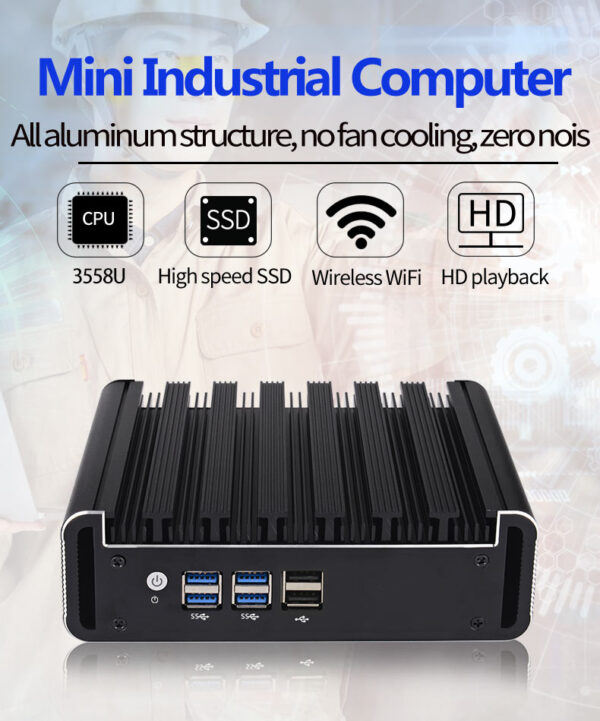
One of the key advantages of the Edge Computing Fanless PCs is their silent operation. Unlike traditional computing systems that rely on noisy cooling fans, the Edge Computing Fanless PC has no moving parts. This design makes them ideal for sensitive environments such as hospitals, laboratories, or offices. In these settings, reducing noise is not just a convenience—it’s essential to maintaining a focused, productive working atmosphere.
Additionally, they are compact and designed to fit into tight spaces. They can be installed in various configurations, including desktop, wall-mounted, or embedded directly into other equipment. Their small footprint allows them to be deployed in areas where traditional PCs would be too bulky or intrusive. The robust design ensures that the Edge Computing Fanless PC continues to operate quietly and efficiently, even in challenging environments. This makes them the perfect choice for mission-critical applications.
Scalability and Flexibility: Supporting Multiple IoT Devices
As industries increasingly rely on IoT devices, the need for robust and scalable computing solutions becomes even more critical. Edge Computing Fanless PC supports multiple IoT devices, making it an ideal solution for managing large-scale networks. These systems can connect to various devices, such as sensors, cameras, and other equipment, and process data in real time.
With Wi–Fi, 4G, and Ethernet connectivity options, the Edge Computing Fanless PC can easily integrate into existing infrastructure. This flexibility enables businesses to scale their edge computing solutions as their IoT networks grow. For example, in a smart city deployment, these PCs could manage everything from traffic sensors to environmental monitoring devices, processing data locally and quickly to improve operational efficiency.
The ability to support multiple devices while maintaining low latency is one of the main reasons businesses are turning to Edge Computing Fanless PC for their IoT networks. These systems aggregate data from various devices and analyse it locally, ensuring that insights are derived instantly.
High Reliability in Harsh and Remote Environments
Edge computing often requires systems to be deployed in remote or harsh environments where traditional computers cannot function effectively. Edge Computing Fanless PC are designed to withstand extreme conditions, including high temperatures, dust, moisture, and vibrations. They are built to operate reliably in environments such as oil rigs, mining sites, agricultural fields, and remote research stations.
These systems also have a high tolerance for temperature fluctuations, with many fanless PCs capable of operating from 0°C to 70°C. This rugged design makes them ideal for industries that require continuous, real-time data collection in difficult-to-reach or harsh environments. The fanless design further enhances reliability by reducing the risk of mechanical failure. Without fans or moving parts, these systems are less likely to break down, reducing costly maintenance and ensuring long-term operation in remote locations.
Energy Efficiency and Cost-Effectiveness of Edge Computing Fanless PC
Energy efficiency is a priority for businesses. Edge Computing Fanless PC are designed to be energy-efficient while still providing high performance. These systems use low-power processors, such as Intel Core i3/i5/i7, that deliver strong performance without excessive energy consumption. This is particularly important for businesses deploying numerous edge devices across large areas, like smart grids or environmental monitoring systems.
By using less power, fanless PCs help reduce operating costs. These savings add up over time, especially in industries with large-scale deployments. Additionally, their energy efficiency makes them more environmentally friendly, helping businesses meet sustainability goals and reduce their carbon footprint. The low energy consumption of Edge Computing Fanless PCs also reduces the heat output, eliminating the need for