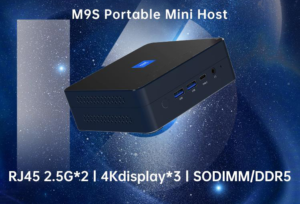
We found that 82% of unplanned downtime is caused by network failure or misconfiguration, costing manufacturers hundreds of thousands of dollars in lost productivity per hour. A well-configured and rugged Linux mini PC must provide deterministic and secure connectivity to support SCADA systems, real-time control, and remote monitoring in demanding production environments. Industrial use generally requires networks that include dual Ethernet ports with redundancy, support for industrial protocols, embedded security services, and additional features. Our goal is to provide you with a comprehensive, data-backed solution to help you choose the right mini PC.
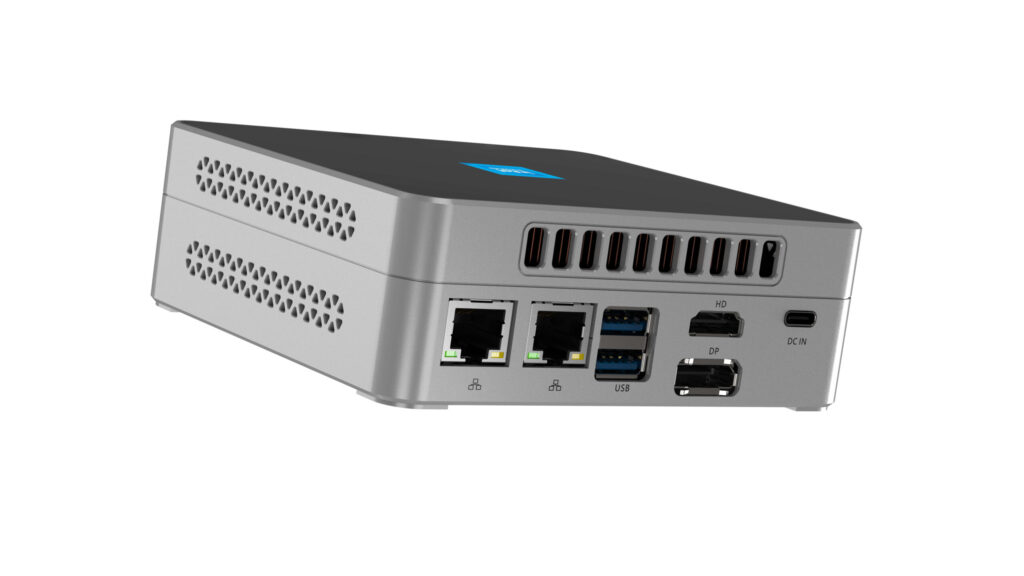
Dual NICs and Redundant Ethernet Connections for Linux Mini PC
Linux mini PCs for industrial environments must be equipped with dual Gigabit Ethernet ports and support network redundancy protocols such as RSTP and LACP. When a network path fails, RSTP automatically reroutes traffic within 10 milliseconds. Additionally, LACP merges two ports into a single logical channel, doubling the throughput to 2 Gbps and balancing VLAN traffic for improved load distribution. When we produce Linux hosts, we configure the two ports as a bonded interface to ensure SCADA connectivity continues even during cable or switch maintenance. Additionally, many industrial mini PC models feature fiber optic SFP uplinks for electrically isolated, long-distance connections, making them ideal for connecting remote devices across a factory campus. By deploying dual network cards with redundancy, you can help eliminate single points of failure, guarantee deterministic packet transmission necessary for real-time automation, and support seamless maintenance without interrupting production.
Linux Mini PC Supporting Industrial Ethernet Protocols
In addition to the basic TCP/IP protocol, an efficient Linux Mini Pc must also natively support industrial Ethernet protocols such as Modbus TCP, PROFINET, EtherNet/IP, and OPC UA. In addition to standard sockets, the industrial kernel or real-time patch (PREEMPT_RT) also includes a protocol stack optimized for low-latency communication. The industrial network reliably transmits both control commands and sensor data with zero jitter and 100% packet delivery.
In addition, we will integrate pre-compiled PROFINET device agents and EtherNet/IP adapters directly into the Linux system, enabling PLC-level interactions with a cycle time of less than 2 milliseconds. Comprehensive protocol support ensures that your Linux Mini PC can be used as both an edge gateway and an embedded controller, seamlessly connecting to a wide range of industrial equipment and legacy systems without additional hardware.
Embedded Security and Network Hardening
Security vulnerabilities in industrial mini PCs can lead to catastrophic operational disruptions. A secure industrial-grade Linux Mini PC must provide a built-in firewall, VPN endpoint, and secure boot with TPM support. We implemented a zone-based firewall to isolate the control network from the corporate IT system, thereby preventing malware from spreading from office endpoints to the factory floor. Additionally, we enforced SSH key authentication, disabled unused services, and applied SELinux policies to confine network daemons within hardened sandboxes.
Meanwhile, leveraging Docker containers and rootless Podman for network services enables rapid patching, secure rollback, and minimized attack surfaces. By hardening the Linux kernel, user space, and container environment, your industrial mini PC will become a resilient node that is resilient to external and internal threats.

Wireless Fallback and Cellular Connectivity
Using the wireless fallback feature on the Linux Mini PC can reduce downtime in the event of a single wired network link failure. Our integrated Wi-Fi module serves as a backup LAN bridge in the event of an Ethernet failure. However, for off-grid or remote sites, an LTE/5G cellular modem with automatic fallback ensures connectivity even during fiber or cable outages. NetworkManager and systemd-networkd automatically switch between Ethernet, Wi-Fi, and cellular connections based on real-time link status while sustaining an uninterrupted VPN tunnel to the central control center. By combining powerful wireless and cellular network interfaces, Linux Mini PCs ensure seamless telemetry and remote maintenance, even in the most challenging deployment scenarios.
Remote Management and Out-of-Band Access
Efficient remote management is critical for maintaining geographically dispersed installations. The powerful Linux Mini PCs include Intelligent Platform Management Interface (IPMI) or serial console redirection for out-of-band access, as well as SSH and web-based dashboards for in-band control. In addition to the standard network console, IPMI provides remote power cycling, BIOS access, and hardware health monitoring, even if the operating system is unresponsive. As a result, technicians can diagnose and reboot the system without having to be on-site. The platform deploys Cockpit for centralized configuration, Ansible for real-time metrics, and Kubernetes operators for automated firmware updates, cutting field maintenance expenses by 75%.
Provide comprehensive network functions.
The network functions of industrial Linux mini computers include dual-redundant network cards, support for industrial Ethernet protocols, embedded security reinforcement, wireless and cellular fallback capabilities, and powerful remote management. We will evaluate each industrial mini computer based on these criteria to ensure that it supports your protocols, security policies, and environmental requirements before deployment.