
When industries push deeper into automation, edge computing, and remote operations, the expectations placed on industrial hardware rise dramatically. In these settings, reliability becomes more than a performance metric—it becomes a safety, productivity, and continuity requirement. As a Fanless Industrial PC manufacturer specializing in the production, research, and engineering of rugged computing systems, we see firsthand why fanless technology is increasingly becoming the backbone of modern industrial environments. Whether it’s a remote oil site, a high-dust production floor, or a vibration-intensive transportation system, companies need hardware that does not fail.
Fanless Industrial PC Thermal Design: Why Passive Cooling Matters
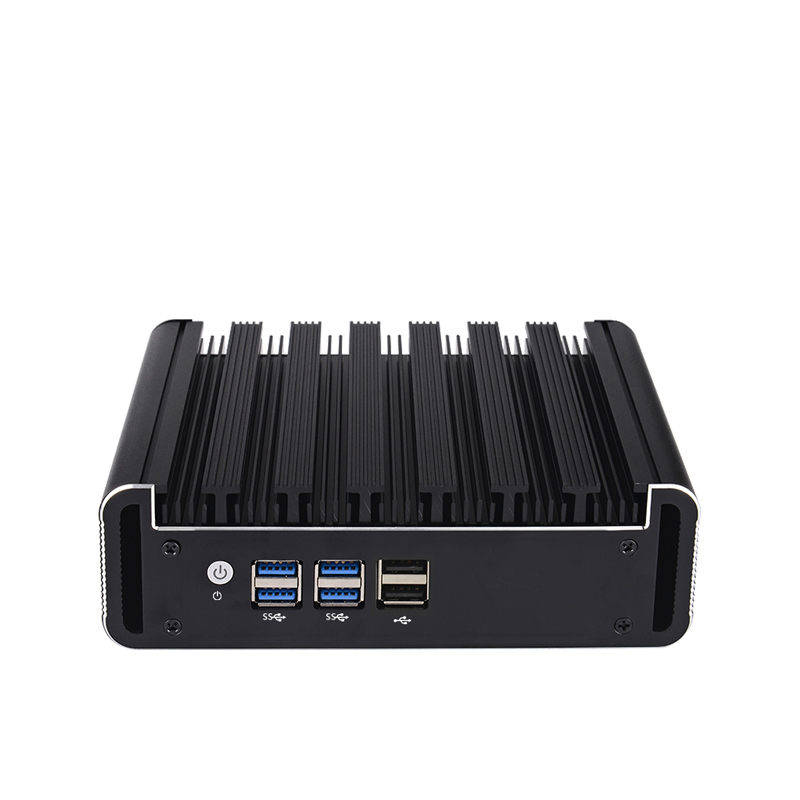
Cooling is one of the most critical elements of industrial hardware reliability. Traditional fan-based systems rely on constant airflow, which leaves them vulnerable to environmental contamination and mechanical failure. Fanless Industrial PCs avoid this risk through a passively cooled industrial computer design that uses conduction and natural convection to dissipate heat instead of active airflow.
This passive cooling approach eliminates moving components that can break down under intense workloads, high temperatures, or continuous operation. Heat sinks, sealed aluminum housings, and well-engineered thermal pathways keep internal components within safe operating ranges. The result is a system that maintains stable performance even in conditions where dust, humidity, or temperature extremes would quickly compromise a standard PC.
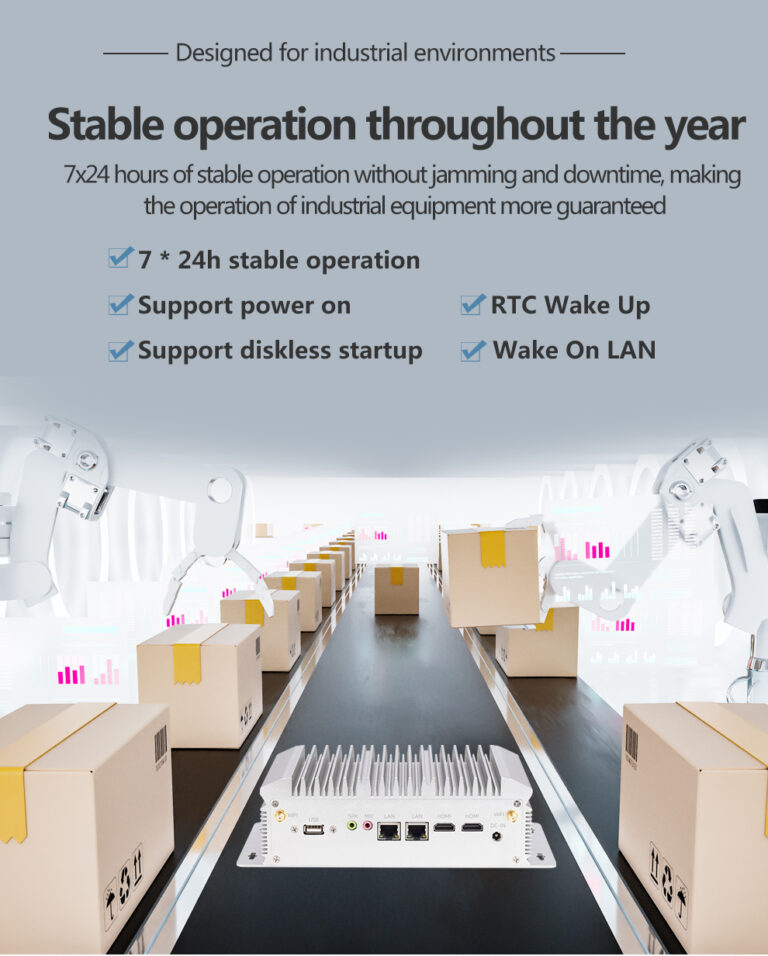
For industries that must operate around the clock—such as logistics centers, production lines, or utility plants—this thermal stability isn’t just convenient; it directly influences productivity and prevents costly downtime.
Fanless Industrial PC Reliability in Dust, Debris, and Contaminants
A significant reason companies choose a Fanless Industrial PC is its sealed, rugged construction. Fans pull air into the system, and along with it come dust particles, metal shavings, chemicals, and moisture. Over time, these contaminants accumulate on circuit boards, clog air passages, and cause overheating or component failure.
The fanless enclosure eliminates this airflow pathway entirely. A tightly sealed chassis—often with ingress protection ratings—shields internal electronics from contaminants that commonly circulate across industrial sites. This makes the system ideal for environments such as woodworking facilities, metal fabrication shops, textile plants, food-processing lines, and warehouses with heavy dust exposure.
With no fan filters to replace and no risk of debris entering the device, a Fanless Industrial PC maintains stable performance with significantly reduced maintenance requirements. This directly translates into longer system uptime, lower total cost of ownership, and predictable long-term reliability.
Performance in Challenging Vibration and Shock Conditions
Industrial environments often involve continuous vibration, sudden shocks, or movement. On vehicles, automated guided vehicles (AGVs), rail systems, or heavy machinery, these forces can easily damage fan motors, spinning drives, and fragile connectors.
A Fanless Industrial PC is specifically engineered to withstand these challenges. Its solid-state construction eliminates fragile moving parts while incorporating reinforced internal components and shock-absorbing structural design. Many systems integrate solid-state drives (SSDs), vibration-resistant mounting brackets, and ruggedized internal connectors to ensure stable operation even under constant motion.
Because of these design advantages, fanless systems are commonly deployed in mobile surveillance, industrial robotics, autonomous vehicles, transportation control systems, and other applications where vibration levels exceed what a standard PC can tolerate. The robust mechanical structure ensures that the computer keeps working—even when the machinery around it is pushing the limits.
Fanless Industrial PC Performance for Edge Computing and Real-Time Applications
As industries evolve toward automation and data-driven operations, computing needs continue to shift from centralized servers to distributed edge locations. A Fanless Industrial PC fits this trend perfectly, offering powerful processing capabilities in environments where air-cooled systems cannot survive.
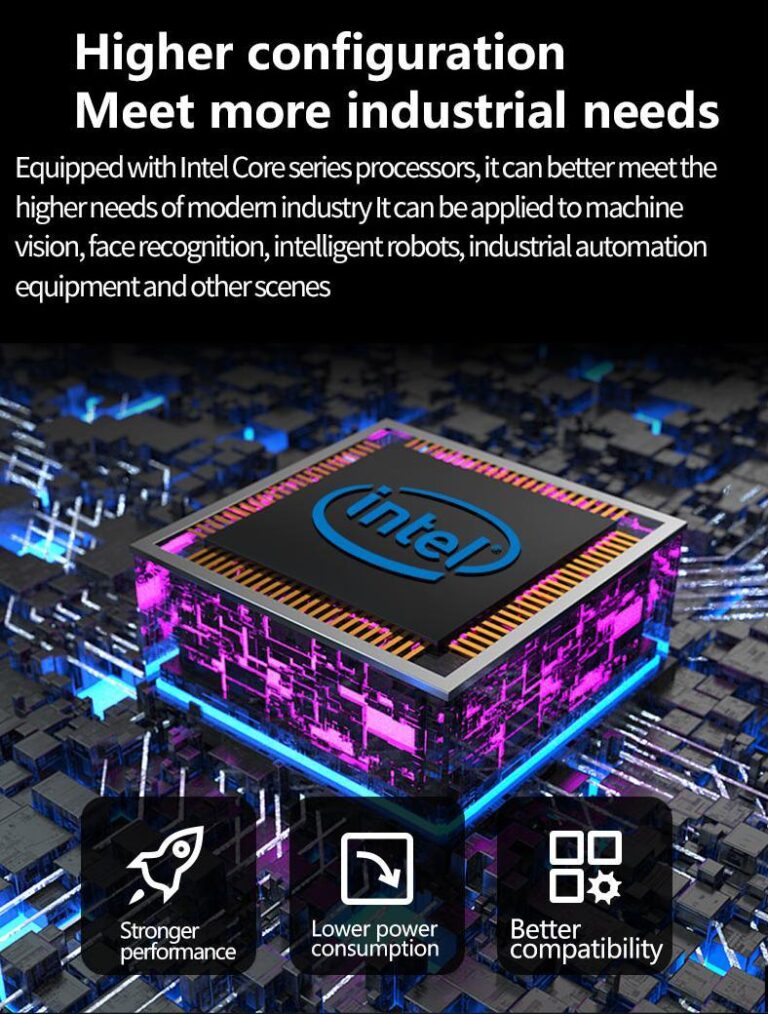
Many fanless solutions now integrate multi-core CPUs, high-speed memory, and advanced storage designed for continuous workloads. Combined with the reliability of a Passively Cooled Industrial Computer, they deliver consistent real-time performance for machine vision, AI inference, quality inspection, robotics control, predictive maintenance, and SCADA systems.
The absence of a fan does not limit performance. Instead, the optimized thermal design ensures the system operates at stable frequencies without throttling. This makes a Fanless Industrial PC particularly effective for applications that require real-time decision-making, low latency, and high computational accuracy.
Longevity, Maintenance, and Lifecycle Benefits
In industrial environments, downtime carries steep financial and operational consequences. Fan-based systems generate ongoing maintenance needs, including filter cleaning, airflow checks, and fan replacements. Over time, these recurring tasks contribute significantly to total ownership costs.
A Fanless Industrial PC eliminates these routine maintenance requirements, dramatically improving lifecycle predictability. With no fans to service and a sealed enclosure that resists contamination, these systems operate for years with minimal intervention.
Furthermore, industrial-grade components, wide-temperature-range electronics, and reinforced power protection ensure a long operational lifespan. Many manufacturers also support extended product cycles, making it easier for system integrators to standardize hardware across multiple sites without worrying about frequent model changes.
These lifecycle benefits allow companies to deploy systems confidently in remote or mission-critical environments where on-site maintenance is difficult, costly, or unsafe.
Fanless Industrial PC Versatility Across Harsh and Remote Applications
One of the strengths of a Fanless Industrial PC is its adaptability. From cold outdoor installations to enclosed spaces with minimal airflow, these systems thrive where conventional computers fail. Their compact footprint, silent operation, and robust thermal engineering allow deployment in a wide array of demanding industries, including:
- Industrial automation and control
- Transportation and fleet systems
- Energy, renewable power, and utilities
- Smart manufacturing and Industry 4.0
- Digital signage in high-traffic or outdoor areas
- Edge data collection and monitoring
- Robotics and AGV systems
Fanless Industrial PC as a Strategic Investment for Modern Industries
As global industries become more dependent on automation, real-time data, and machine intelligence, choosing the right computing hardware becomes a strategic business decision. A Fanless Industrial PC offers a powerful combination of durability, reliability, and performance, making it an ideal choice for harsh environments where failure is not an option.
Its passive cooling architecture reduces maintenance requirements, minimizes downtime, and ensures long-term stability. From vibrations to temperature fluctuations, dust, chemicals, and moisture, a fanless solution is engineered to withstand environmental conditions that traditional PCs simply cannot.
Companies that choose a Fanless Industrial PC ultimately gain more than a rugged device—they gain predictable performance, lower operating costs, and the confidence that critical operations will continue running smoothly. In today’s competitive industrial landscape, reliability is not optional; it is essential. Fanless technology delivers that reliability in the environments that demand it most.